

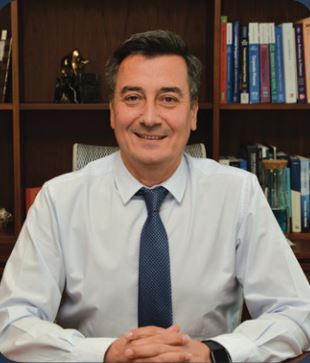
Dean of the Faculty of Economics and Administrative Sciences at TED University, Prof. Dr. Levent Akdeniz:
The TED University Executive MBA program is carefully designed to equip mid- and senior-level managers with the contemporary knowledge, skills, and competencies required to become more effective leaders and to develop a global perspective. We aim to enable managers who are eager to advance in their careers, transition into a new sector, or initiate innovative ventures within their organizations to acquire the strategic vision and competencies needed to manage complex challenges. In this program, we have created an environment that will unlock participants’ potential, allow them to rediscover themselves as leaders, and enable them to build a lifelong network of interaction. In this context, simulation exercises, case studies, and experience-sharing sessions offered in the classroom will provide a challenging yet enjoyable learning experience to find solutions to current managerial problems. You will embark on an educational journey guided by expert faculty members and supported by a group of experienced professionals. As TED University, we are pleased to welcome pioneering, innovative, and visionary managers who shape the future of the business world.
What Are the Features That Differentiate TED University’s Executive MBA Program from Standard MBA Programs?
TED University’s Executive MBA program is designed as a one-year program that minimally affects your professional and personal life. Classes are scheduled every two weeks on Fridays and Saturdays.
In addition to academic sessions, the program offers participants the opportunity to develop their skills and knowledge through experience-sharing sessions with senior executives of leading companies and team-based practical exercises.
Furthermore, by enabling participants who face similar challenges in business life to exchange ideas, the program facilitates collaborative problem-solving among candidates in a way that distinguishes it from standard MBA programs, which typically have a more heterogeneous participant structure.